
Caravan first tow day the calm practice routine
Master your first caravan tow with our expert practice routine. Learn essential UK safety checks, reversing techniques, and legal weight limits for a stress-free journey.
Master your first caravan tow with our expert practice routine. Learn essential UK safety checks, reversing techniques, and legal weight limits for a stress-free journey.

The RoamWorthy editorial team combines decades of caravan, motorhome and campervan ownership experience with industry expertise to provide trusted buying advice.
View all articles →- Dedicate a Full Day: Avoid the pressure of a real trip; use a quiet industrial estate or large car park for your first outing.
- The Safety Stop: Always stop shortly after departure to re-verify hitch security, breakaway cable, and mirror alignment.
- Master the Pivot: Use the 'bottom of the steering wheel' technique for intuitive reversing and practise 'cut-in' awareness on corners.
- Weight & Legal: Verify your outfit's Maximum Authorised Mass (MAM) and your car's towing capacity using the Caravan Towing Calculator before setting off.
Your first tow day should not be a three-hour marathon to a busy campsite. To build genuine confidence and keep your nerves intact, your first outing should be a dedicated practice session. By removing the pressure of arrival times and narrow site entrances, you allow yourself the headspace to learn the physics of your outfit, whether you are towing a lightweight tourer or a larger, twin-axle model from caravan makes like Bailey.
1. Pre-Flight: The Hitching Protocol
Before moving an inch, establish a repeatable hitching routine. Distractions lead to errors, so politely ask companions to wait until you are finished. Consistency is the enemy of accidents. If you are still researching suitable outfits, check our Caravan Layouts guide to see how different floorplans affect weight distribution.
- The Breakaway Cable: According to the DVSA, this is your primary safety fail-safe. Ensure it is routed correctly—ideally through a dedicated attachment point on the towbar, not just looped over the towball.
- The 'Tug Test': Once hitched, wind the jockey wheel down slightly to see if it lifts the rear of the car, confirming a secure mechanical lock.
- Electrics: Check all road lights, including indicators and brake lights. Modern 13-pin systems also power your fridge and battery charging en route. Ensure the cable has enough slack to turn but won't drag.
- Weight Distribution: Ensure your noseweight is within the limits of both your tow car and the caravan hitch. You can use the Caravan Towing Calculator to verify your outfit's compatibility and safety margins.
2. The Initial Shake-Down
Even experienced towers perform a check shortly after starting a journey. Road vibrations can settle components, making this check vital for your peace of mind:
- The Hitch & Stabiliser: Is the handle still fully engaged? Check that the coupling is secure and the safety indicators (if fitted) show a correct connection.
- The Mirrors: Are your extension mirrors still providing a clear view of the caravan's rear corners? Wind resistance can sometimes shift them during the first few miles.
- Wheel Bolts & Tyres: Give the caravan wheels a quick visual check. Excessive heat on the hubs could indicate a binding brake or bearing issue that requires professional attention from caravan dealers.
3. Mastering the Reverse
Find a quiet car park. Use cones or soft bags to simulate a pitch entrance. Reversing a caravan is a counter-intuitive skill that requires muscle memory. If you are struggling with a specific model, remember that longer caravans often react more slowly and predictably than short ones. If you are looking for a more manoeuvrable option, browse our used caravans for shorter single-axle models.
- The 'Bottom of the Wheel' Rule: Place your hand at the 6 o'clock position on the steering wheel. To move the caravan left, move your hand to the left. This simplifies the 'reverse-steering' logic.
- Small Inputs: Over-steering is the most common mistake. Make small adjustments and wait for the caravan to react. If the angle becomes too acute (approaching a 'jack-knife'), pull forward and straighten up.
- Straightening Up: Once the caravan is heading where you want, start 'following' it with the car to straighten the outfit.
4. Real-World Manoeuvres
Once comfortable, graduate to these essential road scenarios to understand how your outfit behaves in traffic:
- The Roundabout Loop: Practise taking a wider line. Remember 'cut-in'—the caravan's wheels will take a tighter path than the car's rear wheels. This is especially critical for wide-body models.
- The Dual Carriageway: Experience the 'bow wave' effect when being overtaken by large HGVs. Keep a steady pace, look well ahead, and avoid sudden steering corrections.
- The Hill Start: Practise moving off smoothly. If your car has an electronic handbrake with 'Auto-Hold', learn how it interacts with the caravan's weight to prevent rolling back.
Safety & Compliance Checklist
| Item | Action |
|---|---|
| Licence Check | Verify your Category B entitlement. Drivers who passed their test from 1 January 1997 can tow a trailer up to 3,500kg MAM. Check the Gross Train Weight (GTW) on your car's VIN plate. |
| Tyre Pressures | Check both car (at fully loaded PSI) and caravan (cold) pressures. Don't forget the spare! Check our Find a Dealer tool if you need a professional safety service. |
| Stabiliser Pads | Ensure your stabiliser hitch pads are clean and free of grease. Contamination can reduce the effectiveness of the friction pads. |
| Breakaway Cable | Check for any frayed wires or damaged clips. Replace immediately if compromised, as this is a legal safety requirement. |
Frequently Asked Questions
Do I need a special licence to tow a caravan?
According to GOV.UK, if you passed your car driving test from 1 January 1997, you can tow a trailer that weighs up to 3,500kg MAM. If you passed before 1997, you are usually allowed to drive a vehicle and trailer combination up to 8,250kg MAM. Always check your driving licence information online to be sure.
What is Maximum Authorised Mass (MAM)?
MAM is the weight of a vehicle or trailer including the maximum load it can safely carry. This is also known as the gross vehicle weight (GVW) or permissible maximum weight, and is usually found on a plate or sticker fitted to the vehicle or trailer.
What happens if the caravan starts to sway (snake)?
Do not slam on the brakes. Keep the steering wheel straight, ease off the accelerator, and allow the car's engine braking to slow you down naturally. Modern caravans often feature electronic stability systems to help mitigate this risk.
Can I tow with an electric vehicle (EV)?
Yes, many modern EVs have high towing capacities, but be aware that towing can significantly reduce your driving range. If you prefer a self-contained unit to avoid towing range issues, you might explore motorhome makes instead.
Where can I find professional towing training?
The DVSA recommends finding a training provider through the National Register of LGV Instructors, the Safe Towing Scheme, or Skills for Logistics to develop your skills safely.
How do I check my car's towing capacity?
Check your vehicle's owner's manual or the VIN plate (usually found in a door pillar or under the bonnet) for the Gross Train Weight. You can also use our towing calculator for a quick compatibility check.
What should I do if my breakaway cable is damaged?
The breakaway cable is a vital safety fail-safe. If it is frayed or the clip is damaged, it must be replaced immediately before towing. It ensures the caravan brakes are applied if it becomes detached from the tow car.
One calm practice day can turn towing from a stressful chore into an enjoyable part of your holiday. If you are still looking for the perfect match for your car, browse our caravan makes hub or use our Caravan Towing Calculator to ensure a safe weight match. For those considering a used purchase, visit our used caravans section for advice on what to look for during a viewing, including checking the MAM plate for legal compliance.
Ready to find yours?
Put this knowledge into action
Can your car tow it?
Free towing check. Takes 30 seconds
Save outfits, compare setups, download or email a PDF report. Find compatible caravans.
Browse by Weight
Related Makes & Models
Spotted an error? Let us know.
Continue Reading
More expert guides to help you make informed decisions
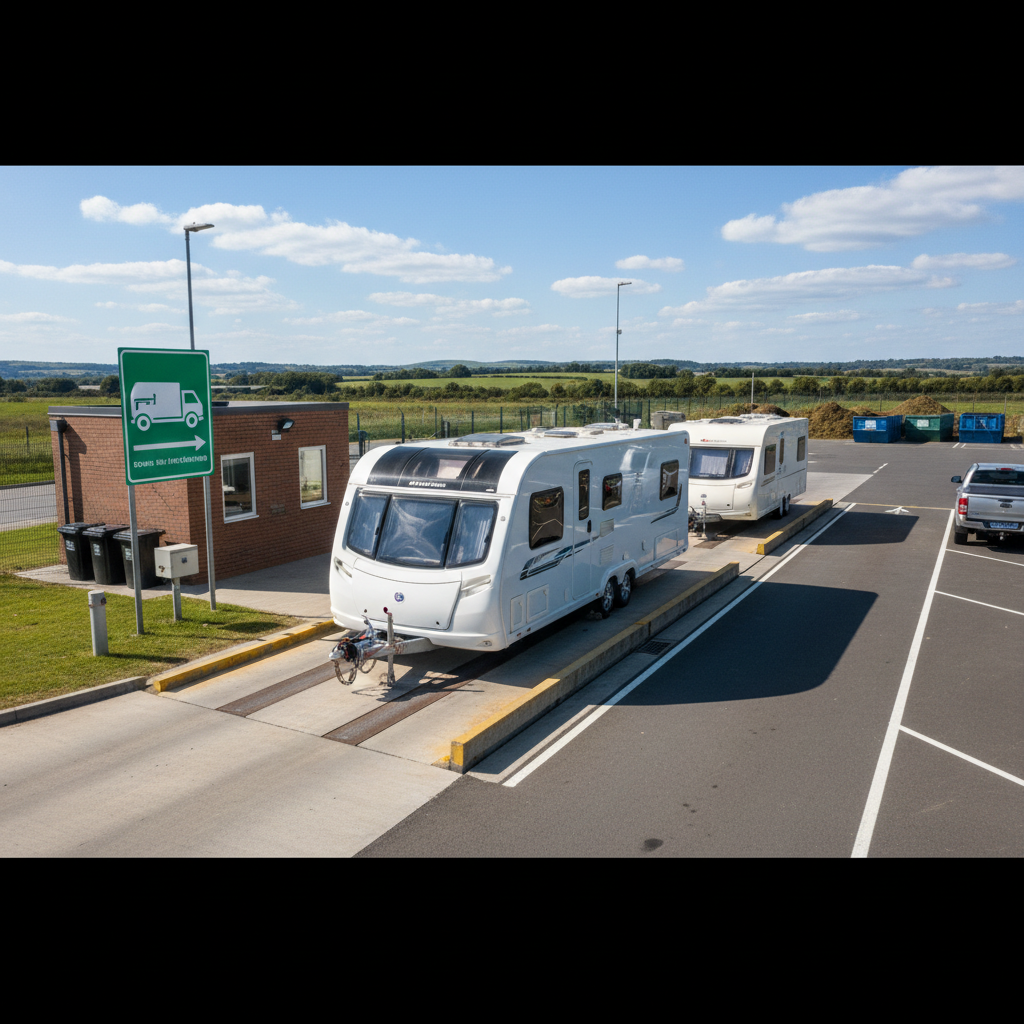
How to Use a Public Weighbridge Safely
Ensure your caravan or motorhome is road-legal. Learn how to find a UK public weighbridge, understand DVSA weight terms, and verify your axle limits to avoid fines.
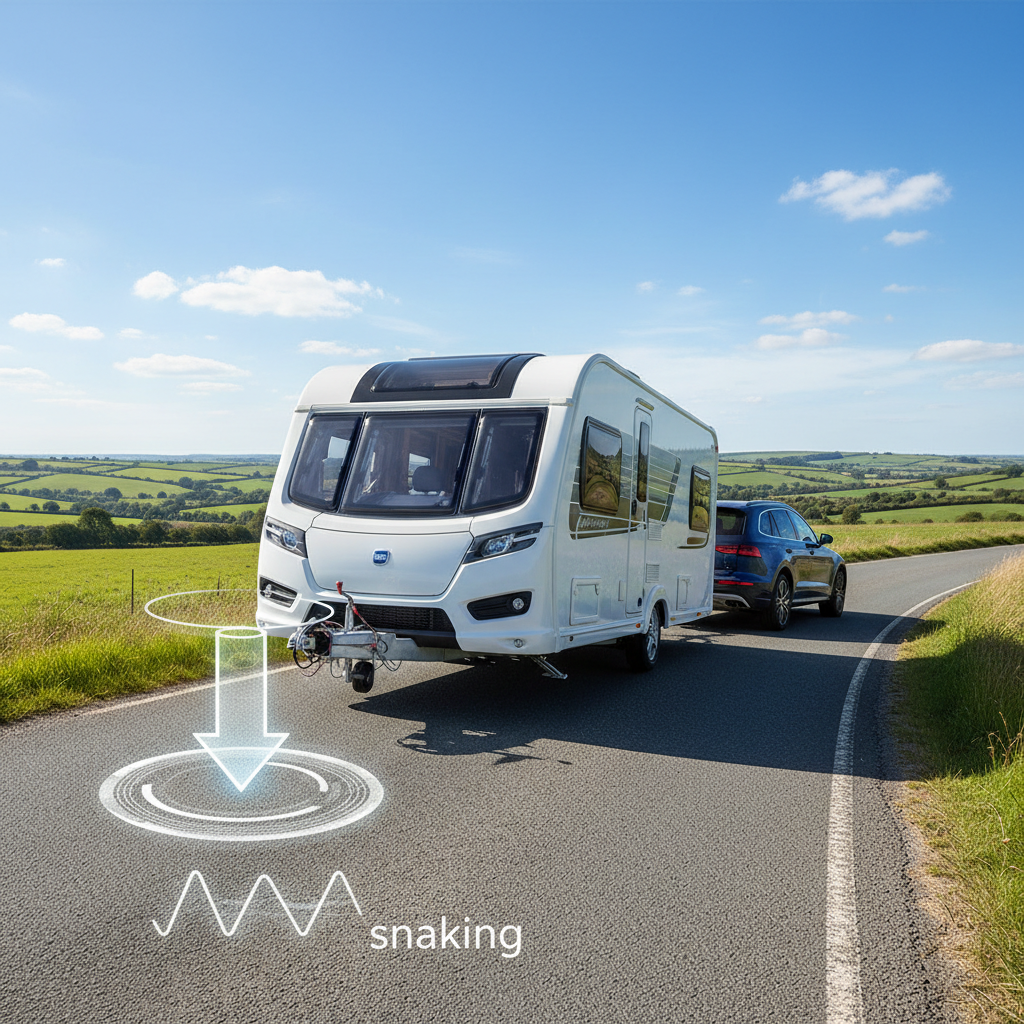
Caravan noseweight and stability, how to measure and stay safe
Quick answer: noseweight is the downward force the caravan hitch puts on the towball. Aim for roughly 5 to 7 percent of the loaded caravan weight, and never exceed the lower of your car towball limit, hitch limit, or the caravan manufacturer noseweight figure.
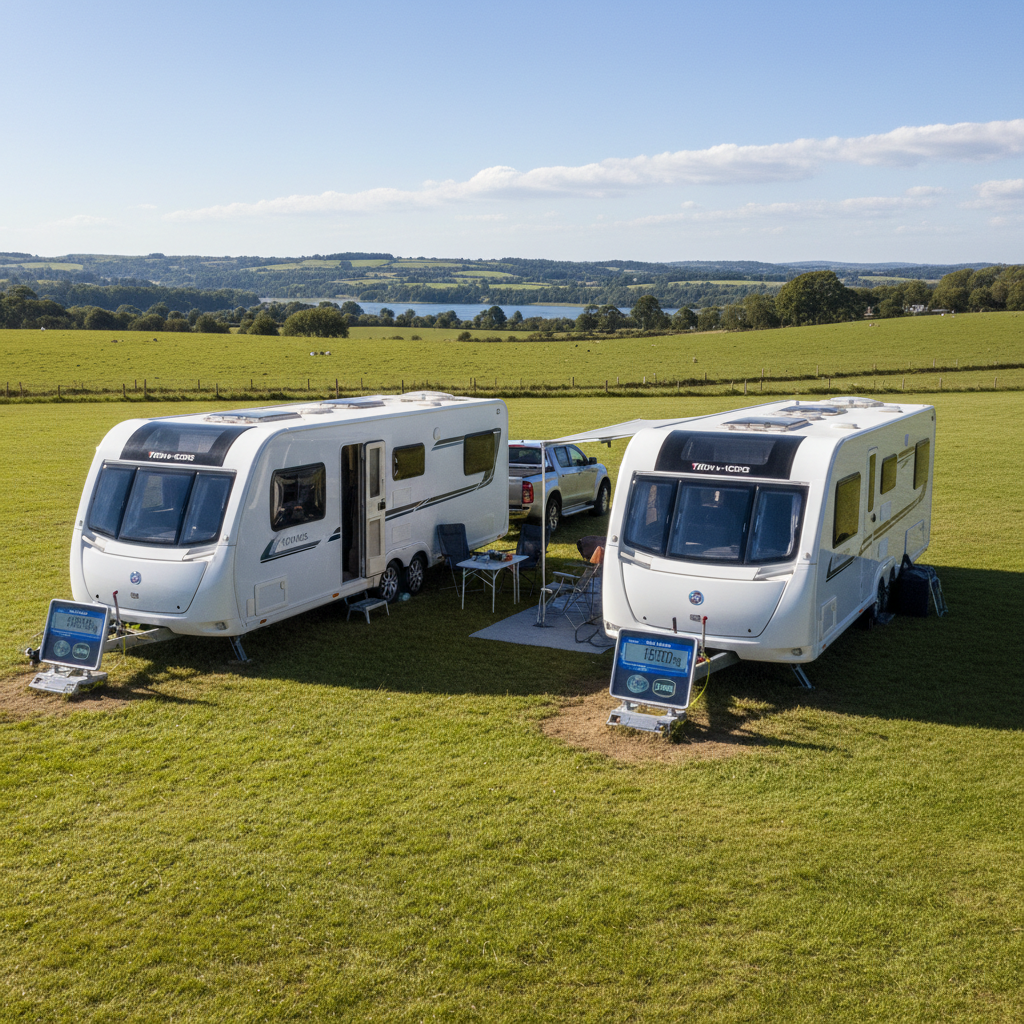
Understanding Payload and Weights for Twin Axle Caravans
Master twin-axle caravan weights for 2026. Learn about the 'Payload Trap', quad-motor movers, and how to stay legal with Gross Train Weight (GTW) limits.