
Motorhome payload explained, the quickest way to avoid a weighbridge shock
Avoid DVSA enforcement and insurance issues. Learn how to calculate motorhome payload, understand MAM vs MRO, and manage weight for the 2026 touring season.
Avoid DVSA enforcement and insurance issues. Learn how to calculate motorhome payload, understand MAM vs MRO, and manage weight for the 2026 touring season.

The RoamWorthy editorial team combines decades of caravan, motorhome and campervan ownership experience with industry expertise to provide trusted buying advice.
View all articles →Motorhome payload is the difference between your vehicle's Mass in Running Order (MRO) and its Maximum Authorised Mass (MAM). In the UK, exceeding the weight limit stated on your VIN plate is illegal and carries potential enforcement action from the DVSA. To stay safe, you must account for all passengers, essential fluids, and any equipment installed on the vehicle, as these items reduce your available allowance. Overloading may also affect your insurance cover or claims.
Payload is the most common motorhome regret that nobody talks about on the forecourt. It is also entirely avoidable. If you understand payload and estimate your real touring load before you buy, you can choose a motorhome that feels relaxed rather than legally constrained as we head into the 2026 touring season. Whether you are browsing used motorhomes or new models, the weight of your gear is just as important as the layout.
Who this is for
Whether you are eyeing a luxury Bailey or a compact campervan layout, understanding weight is vital. This guide is for buyers who want to understand how payload affects real-world trips and avoid the complications of a roadside DVSA check. Understanding these limits is essential before visiting motorhome dealers to make a purchase.
The Reality Check: Why Payload Matters
People, water, and equipment add up fast. A motorhome with a marginal payload becomes a constant negotiation with yourself. In the UK, the DVSA performs roadside checks on drivers and vehicles. According to official GOV.UK guidance, the Maximum Authorised Mass (MAM) is the weight of a vehicle including the maximum load that can be carried safely when it is being used on the road. This is also known as gross vehicle weight (GVW) or permissible maximum weight.
If you are found to be over your MAM, you are operating outside the legal limits of the vehicle. This can lead to roadside enforcement and may require you to reduce your load before continuing. Furthermore, operating an overloaded vehicle may affect your insurance policy or any subsequent claims, and readers should check their specific policy details with their insurer.
The Essential Definitions
Understanding the terminology used by the National Caravan Council (NCC) and the DVSA is the first step to staying legal on the road:
- Maximum Authorised Mass (MAM): The weight of a vehicle including the maximum load that can be carried safely. This is listed on a plate or sticker fitted to the vehicle.
- Mass in Running Order (MRO): Definitions can vary by manufacturer and the specific standard applied. Generally, this is the weight of the vehicle with 'standard' equipment, including the driver (often 75kg), fuel tank (often 90% full), and essential fluids. Always check your manual for the specific definition used for your vehicle.
- Unladen Weight: The weight of the vehicle when it is not carrying any passengers, goods, or other items. It includes the body and all parts normally used on the road, but specifically excludes fuel.
- User Payload: The MAM minus the MRO. This is your allowance for everything else you bring on your journey.
- Gross Train Weight (GTW): The total weight of the tractor unit plus trailer plus load. This must not be exceeded when towing.
Managing Your Touring Load
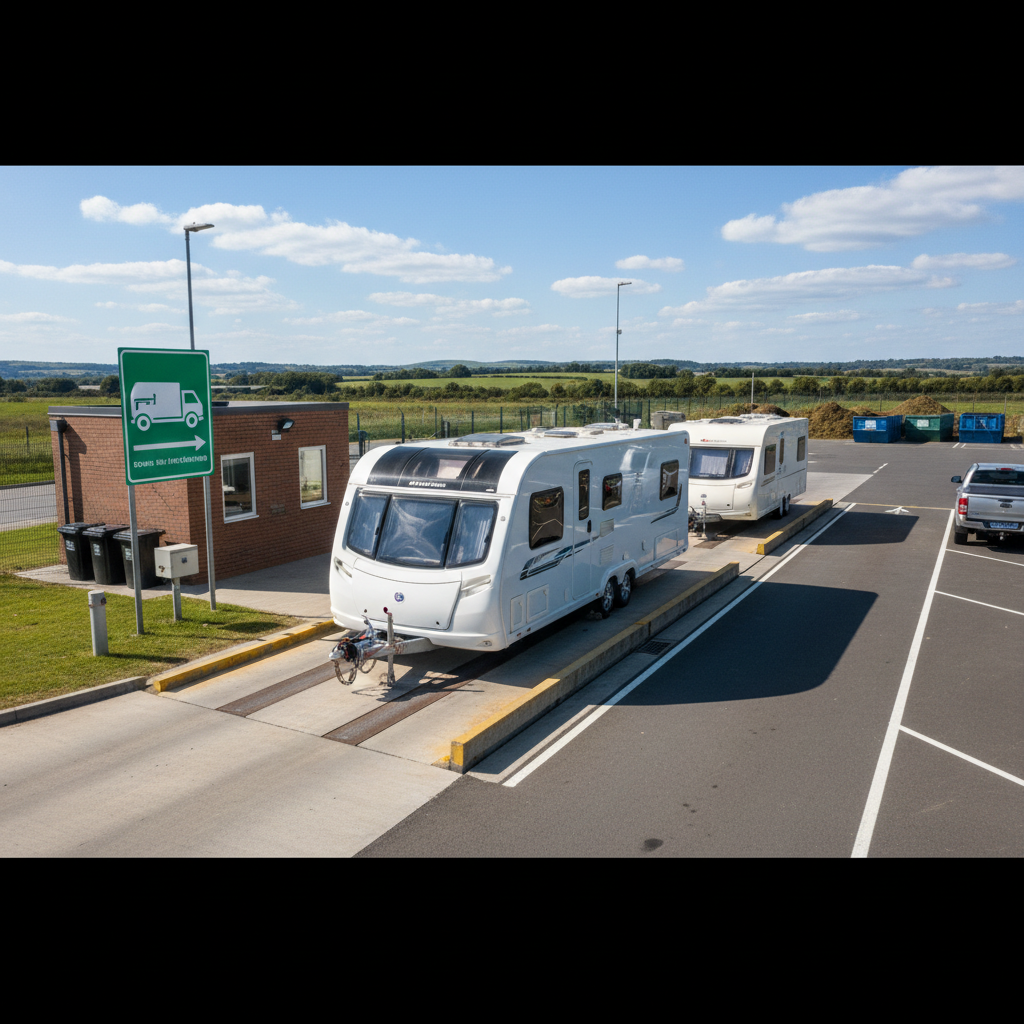
To avoid a weighbridge shock, you must carefully consider what you pack. While brochures provide a starting point, the reality of touring often involves significant additional weight. Before you head out, use our Motorhome Weight Checker to help estimate your status, but remember that a public weighbridge is the only reliable way to verify your actual loaded weight.
One of the most significant factors is water. Since 1 litre of water weighs 1kg, a full fresh water tank can immediately remove a large portion of your payload. Many manufacturers now design systems with specific settings to limit water weight during transit. Similarly, if the MRO includes one driver, every additional passenger you carry reduces your remaining payload by their exact weight.
Dealer-fit accessories are another common source of "hidden" weight. Items such as awnings, solar panels, satellite dishes, and bike racks are often installed after the vehicle has left the factory. Because the MRO is typically calculated based on the factory exit weight, these additions must be subtracted from your user payload allowance. For those looking at different motorhome layouts, consider how the placement of these items affects your individual axle limits.
Layout Choices and Weight Distribution
Storage areas, such as large rear garages, are excellent for gear but require careful management. Overloading the rear of the vehicle can potentially exceed individual axle limits, even if the total MAM is still legal. The VIN plate on your vehicle will list individual limits for the front and rear axles. Overloading an axle can affect steering and braking performance. If you are unsure about your vehicle's capacity, consult specialist dealers who can provide technical guidance on specific chassis types, such as those from AL-KO.
Actionable Payload Checklist
- Check the Plate: Locate the manufacturer's plate (often under the bonnet or in the door shut) to confirm the actual MAM, GTW, and axle limits.
- Account for Extras: Subtract the weight of all dealer-fitted accessories from your brochure payload.
- Licence Check: If the MAM is over 3,500kg, you require a Category C1 licence. Over 7,500kg requires Category C. Read our guide on whether you need a C1 licence.
- Visit a Weighbridge: The only way to be certain of your actual weight is to visit a public weighbridge with the vehicle fully loaded.
Frequently Asked Questions
Can I upgrade my motorhome payload?
Yes, this process is known as 'uprating'. If the chassis has spare technical capacity, you may be able to increase the MAM. This often requires a new weight plate and may change the vehicle's tax class. It is important to note that if the new MAM exceeds 3,500kg, you will need a C1 category on your driving licence.
Does the MRO include my leisure battery?
This depends on the manufacturer and the year of production. While many include a standard battery in the MRO, additional batteries or upgrades to heavier systems will count against your user payload. You should verify the specific MRO composition in your owner's manual.
What happens if the DVSA finds my vehicle is overloaded?
The DVSA has the authority to carry out roadside checks. If a vehicle is found to exceed its legal weight limits (MAM or individual axle limits), the driver may be subject to enforcement action. This can include being prohibited from continuing the journey until the vehicle's weight is reduced to a legal level.
How do I find a public weighbridge in the UK?
GOV.UK provides resources to help you find a weighbridge. Local councils also maintain lists of public weighbridges located at recycling centres, ports, or transport hubs. It is recommended to call ahead to confirm opening times and fees.
Is MTPLM the same as MAM?
Yes. Maximum Technical Permissible Laden Mass (MTPLM) and Maximum Authorised Mass (MAM) are terms used to describe the maximum legal weight of the vehicle when fully loaded. You may also see this referred to as Gross Vehicle Weight (GVW).
What is 'down-plating'?
According to GOV.UK, if a vehicle is unlikely to be used at its potential maximum weight, it may be ‘down-plated’. This means a lower weight is shown on the plate or sticker attached to the vehicle, which is sometimes done to align the vehicle with specific driving licence categories.
Does the MRO include a full tank of fuel?
While industry standards often define MRO with a fuel tank 90% full, the specific amount can vary by manufacturer and the standard they follow. However, the unladen weight of a vehicle specifically does not include the weight of the fuel.
Next Steps
Ready to find yours?
Put this knowledge into action
Related Tools
Related Makes & Models
Spotted an error? Let us know.
Continue Reading
More expert guides to help you make informed decisions
How to Use a Public Weighbridge Safely
Ensure your caravan or motorhome is road-legal. Learn how to find a UK public weighbridge, understand DVSA weight terms, and verify your axle limits to avoid fines.

June 2026 Caravan Market Update and Pricing Report
June 2026 Caravan Market Report: 8ft-wide models dominate resale values, while family 6-berths sell in just 6 days. Get the latest pricing data and buying tips.

Understanding Payload and Weights for Twin Axle Caravans
Master twin-axle caravan weights for 2026. Learn about the 'Payload Trap', quad-motor movers, and how to stay legal with Gross Train Weight (GTW) limits.