
Warranties for Caravans Motorhomes and Campervans What Really Matters
Understand UK caravan and motorhome warranties. Learn about manufacturer cover, the Consumer Rights Act 2015, and how to avoid common exclusions like water ingress.
Understand UK caravan and motorhome warranties. Learn about manufacturer cover, the Consumer Rights Act 2015, and how to avoid common exclusions like water ingress.

The RoamWorthy editorial team combines decades of caravan, motorhome and campervan ownership experience with industry expertise to provide trusted buying advice.
View all articles →- A warranty is a commercial contract, not a legal guarantee; exclusions for water ingress, wear-and-tear, and high-tech electronics are common.
- Under the Consumer Rights Act 2015, you have statutory protections when buying from a dealer that exist regardless of any commercial warranty.
- Manufacturer warranties on new vehicles typically require annual habitation checks at an Approved Workshop (AWS) to remain valid.
- Always verify if a used vehicle warranty is 'in-house' or a third-party insurance product with specific claim limits.
Warranties are incredibly comforting until the moment you try to claim. In the UK leisure vehicle market, the goal isn't simply to "get a warranty"—it is to understand exactly what protection you have and which risks you are still personally carrying. As the complexity of onboard electronics and habitation systems increases, this understanding is critical for anyone browsing used motorhomes or new caravans.
The Three Pillars of UK Protection
Buyers often confuse different types of protection. Understanding which one applies to your vehicle is the first step to a stress-free ownership experience. Each pillar offers a different level of security and involves different legal frameworks.
1. Manufacturer Warranty
Typically found on new vehicles from brands like Bailey, Swift, or Coachman. These are often split into two parts: the base vehicle/chassis warranty (often provided by Fiat, Ford, or Peugeot) and the habitation/bodywork warranty.
Crucial Note: These are often transferable to second owners, but usually only if a transfer fee is paid and the service history is impeccable. For example, a 10-year water ingress warranty often requires strict annual inspections to stay active. If you are looking at caravan makes, always ask for the specific transfer terms.
2. Dealer Warranty
Provided by the seller on used caravans. These vary significantly. Some caravan dealers provide an "in-house" warranty where they perform the repairs themselves; others provide a policy from a third-party insurance provider. Third-party policies often have strict "claim limits" (e.g., £500 or £1,000 per claim) which may not cover a major fridge or gearbox failure. When evaluating motorhome makes, the quality of the dealer's own workshop is often as important as the warranty document itself.
3. Statutory Rights (The Consumer Rights Act 2015)
Regardless of what a commercial warranty says, if you buy from a VAT-registered dealer, you have legal rights. According to Trading Standards, if a fault appears within the first six months, it is generally assumed to have been there at the time of sale unless the dealer can prove otherwise. This is a powerful layer of protection that a private sale does not offer, as detailed in our guide on dealer vs private sales. If a dispute arises, the Financial Ombudsman Service may be able to help if the warranty is an insurance product.
What is Commonly Covered (and What Isn't)
The detail matters more than the headline duration. You must check if high-tech components like lithium power systems or integrated touch-screens are included, as these are becoming standard in modern caravan layouts.
| Commonly Covered | Commonly Excluded |
|---|---|
| Major appliances (Fridge, Cooker) | Wear and Tear: Tyres, brake pads, bulbs |
| Water system pumps and taps | Water Ingress: Unless a specific body-shell warranty is active |
| Chassis and braking components | Soft Furnishings: Zips, foam degradation, curtains |
| Heating systems (Alde/Truma) | Neglect: Damage caused by frost or lack of servicing |
The Questions That Save Arguments Later
Before signing for a specific vehicle, ask these four specific questions to ensure you aren't left with unexpected costs:
- Is the warranty in-house or third-party? In-house usually means the dealer is more motivated to fix it quickly to maintain their reputation. Third-party policies are managed by external insurers.
- What is the 'Claim Limit'? If your gearbox fails and costs £3,000, but your warranty limit is £1,000, you are liable for the rest. Always check if the limit is per claim or total.
- Where must the repairs be done? Some warranties require you to return the vehicle to the original dealer, which is difficult if you live hundreds of miles away. Check if they allow repairs at any Approved Workshop (AWS).
- Is the Habitation Check mandatory? Most warranties are voided if you miss your annual habitation service by even a single month. The Approved Workshop Scheme (AWS) is the industry benchmark for these services.
Pre-Purchase Warranty Checklist
- [ ] Request the full Warranty Terms & Conditions before paying a deposit.
- [ ] Check the service book for "stamps"—missing years usually mean the manufacturer's water ingress warranty is void.
- [ ] Verify if the warranty is insurance-backed; if so, you may have recourse via the Financial Ombudsman Service if a claim is unfairly rejected.
- [ ] Confirm if the warranty covers "Recovery"—towing a broken-down motorhome can be extremely expensive.
- [ ] Ask if the warranty covers the cost of diagnostics, or just the parts and labour for the fix.
How to Use Warranty as a Negotiation Tool
Instead of just haggling on price, use the warranty to add value to your purchase of used caravans or motorhomes:
- The "Fresh Start" Clause: Ask for a brand new habitation service and damp report from an AWS-approved technician to be included as a condition of sale.
- Extended Coverage: If the dealer offers 3 months, ask for 12 months to close the deal. This provides peace of mind through a full cycle of seasons.
- Written Evidence: If they promise "we'll fix anything," get that specific phrase and any exclusions written into the sales invoice to support your Consumer Rights Act protections.
Frequently Asked Questions
Does a warranty cover damp?
Only if it includes a specific "Water Ingress" or "Body Integrity" clause. Standard mechanical warranties usually exclude water damage. Manufacturer water ingress warranties often last 6–10 years but require strict annual servicing at an approved facility.
Can I service my caravan anywhere?
To maintain a manufacturer warranty, you usually must use a dealer within their network or a workshop approved by the Approved Workshop Scheme (AWS). Using a non-approved workshop may void your habitation and bodywork cover.
Is a warranty the same as insurance?
No. A warranty covers mechanical or electrical failure due to defects in manufacturing or materials. Insurance covers accidental damage, fire, and theft. You need both for full protection on the road.
What happens if the dealer goes bust?
If you have an "in-house" warranty, it usually disappears with the business. If you have a third-party insurance-backed warranty, the cover remains valid as it is held by an external provider, offering better long-term security.
Are batteries covered by warranty?
Leisure batteries are often treated as "consumables" and may have a much shorter warranty period (e.g., 6–12 months) than the rest of the vehicle, even on brand-new models. Always check the specific battery warranty terms.
Can I transfer a warranty when I sell my motorhome?
Manufacturer warranties are often transferable to a new owner for a small fee, provided the service history is complete and up to date. Dealer-specific used warranties are rarely transferable to subsequent owners.
What is the Consumer Rights Act 2015?
It is UK legislation that requires goods to be of satisfactory quality, fit for purpose, and as described. It provides a legal safety net that sits alongside any commercial warranty when buying from a professional dealer, offering protection for the first six months and beyond in specific circumstances.
Ready to find yours?
Put this knowledge into action
Spotted an error? Let us know.
Continue Reading
More expert guides to help you make informed decisions

Habitation Checks Explained What a Report Really Tells You
What is a habitation check? Learn what the report covers, how to read damp percentages, and why AWS certification is vital for your motorhome or caravan warranty.

Your Consumer Rights When Buying a Caravan or Motorhome
Understand your legal protections under the Consumer Rights Act 2015 when buying a caravan or motorhome. Learn about the right to reject, Section 75, and private sale risks.
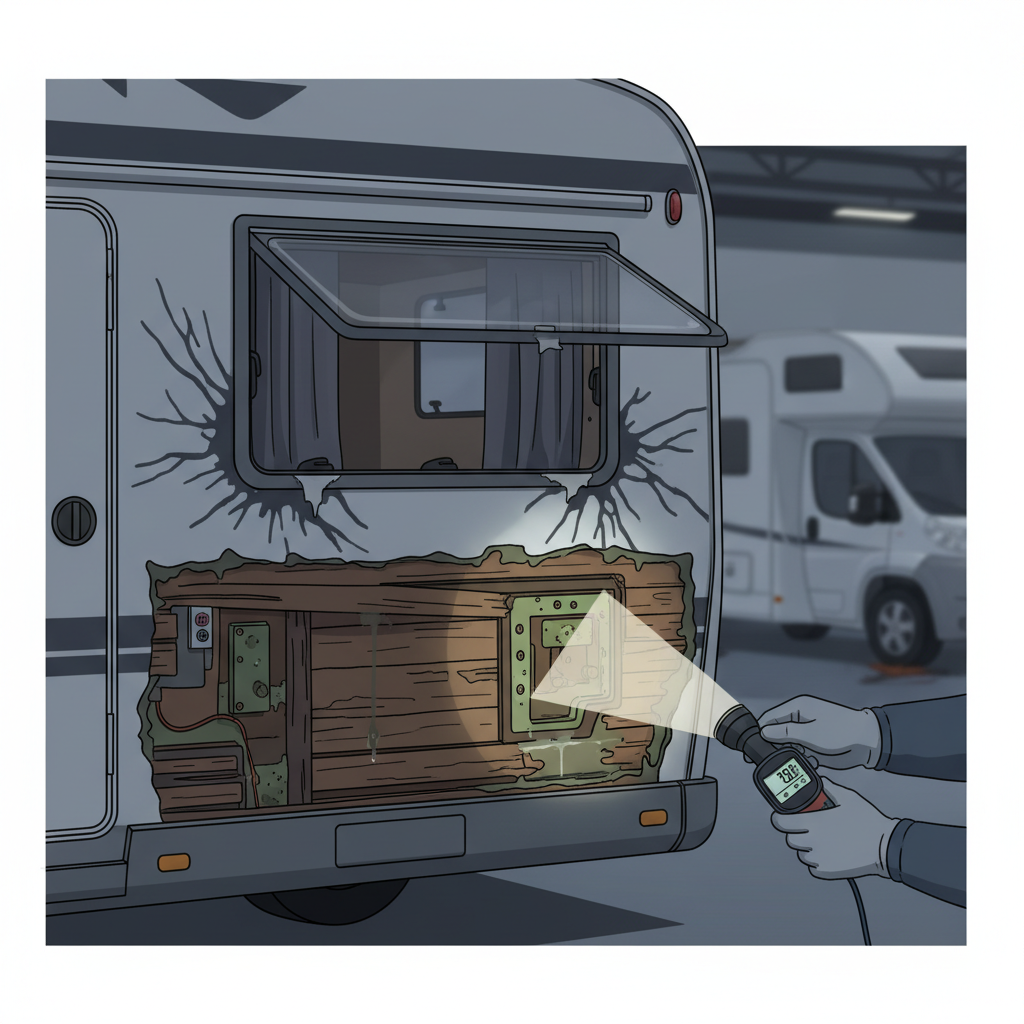
Damp in motorhomes and campervans, where it hides and how to check
Discover how to identify and prevent moisture issues in your motorhome or campervan. Learn about common hotspots, the importance of AWS habitation checks, and what to look for